
Overview of Tech Giants Envision a Future Beyond Smartphones
For more than 15 years, smartphones have been a big part of our lives. We wake up with them. We work with them. We relax with them. Almost everything we do goes through a phone.
But now, something interesting is happening.
The world’s biggest technology companies are starting to think beyond smartphones. Companies like Apple, Google, Meta, Microsoft, and others believe the next big change in technology will not be another phone.
So what is coming next?
In this guide, we will explore why tech giants want to move beyond smartphones, what new technologies may replace them, and what this future means for everyday people.
Why Tech Giants Are Thinking Beyond Smartphones
Smartphones are powerful, but they have limits.
1. Smartphones Have Reached Their Peak
Every year, new phones look almost the same as old ones.
Bigger screens. Better cameras. Faster chips.
But these changes are small.
Tech companies know it is getting harder to surprise users with phones. This is called market saturation. Almost everyone who wants a smartphone already has one.
2. People Want More Natural Technology
Using a phone means:
-
Looking down at a screen
-
Typing on glass
-
Carrying a device all day
Tech giants want technology to feel more natural, like it is part of your life, not something you hold all the time. Read What is Artificial Intelligence in Easy Words
The goal is simple:
Technology should work around you, not pull you away from the real world.
3. New Technology Is Ready
New tools are now strong enough to replace phones, such as:
-
Artificial Intelligence
-
Smart wearables
-
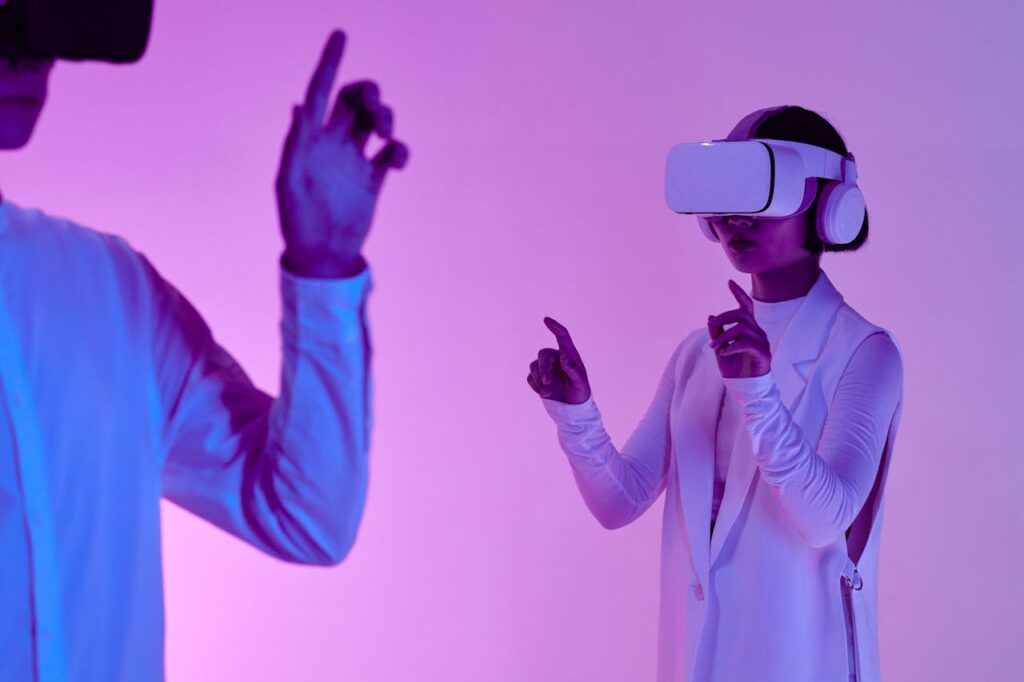
Augmented Reality
-
Voice assistants
These tools were not ready before. Now, they are.
The Post-Smartphone Era: What Does It Mean?
The post-smartphone era does not mean phones will disappear tomorrow.
It means smartphones will slowly become less important, while other devices take their place.
Just like:
-
Computers did not disappear when phones arrived
-
TVs did not disappear when laptops arrived
Phones may become just one part of a bigger system.
Technologies That May Replace Smartphones
Let’s look at the main technologies that tech giants believe could lead the future.
1. Wearables and Smart Glasses
What Are Wearables?
Wearables are devices you wear on your body, like:
-
Smartwatches
-
Fitness bands
-
Smart rings
-
Smart glasses
You already see this with Apple Watch and other devices.
Smart Glasses: A Big Focus
Smart glasses are one of the strongest phone replacements.
They can:
-
Show information in front of your eyes
-
Give directions while walking
-
Translate languages in real time
-
Take photos and videos
-
Answer questions using AI
Instead of pulling out a phone, you just look or speak.
Why Tech Giants Love Smart Glasses
-
Hands-free use
-
Always available
-
More natural interaction
-
Better connection with the real world
Companies like Meta and Apple are investing heavily in this space.
2. Artificial Intelligence Assistants
AI Is Becoming the Center of Technology
AI assistants are no longer simple tools.
They can now:
-
Understand natural language
-
Learn your habits
-
Predict what you need
-
Complete tasks without apps
Examples include advanced voice assistants and AI agents.
Life Without Apps
In the future, you may not open apps at all.
Instead of:
“Open this app, click this button”
You may say:
“Book my flight, remind me tomorrow, and send the details to my family”
AI will handle everything.
Why AI Can Replace Smartphones
-
No screen needed
-
Works through voice or wearables
-
Saves time
-
Feels personal
Tech giants see AI as the brain of future devices.
3. Augmented Reality and Mixed Reality
What Is Augmented Reality?
Augmented Reality, or AR, adds digital information to the real world.
For example:
-
Seeing directions on the road
-
Viewing product details by looking at them
-
Virtual screens floating in front of you
Mixed Reality combines real and digital worlds even more deeply.
Apple’s Vision for Spatial Computing
Apple believes future computing will happen in space, not on flat screens.
With AR and MR:
-
Screens can be anywhere
-
Workspaces can follow you
-
Learning becomes interactive
This removes the need to carry a phone or laptop.
4. Brain–Computer Interfaces (Long-Term Future)
This sounds like science fiction, but it is real research.
What Is a Brain–Computer Interface?
It allows people to control devices using brain signals.
In the future, this could mean:
-
Typing without a keyboard
-
Controlling devices with thoughts
-
Helping people with disabilities
This technology is still far away, but tech giants are already investing in it.

How Major Tech Companies See the Future
Each tech giant has its own vision beyond smartphones.
Apple
Apple focuses on:
-
Wearables
-
Spatial computing
-
Seamless device ecosystems
They believe phones will become less central, while glasses, watches, and AI work together.
Google is working on:
-
Ambient computing
-
AI everywhere
-
Voice-first interaction
Their goal is technology that is always around you, not inside your pocket.
Meta
Meta believes the future is:
-
Smart glasses
-
Augmented reality
-
Digital and physical worlds combined
They see smartphones as a stepping stone, not the final product.
Microsoft
Microsoft focuses on:
-
AI productivity
-
Mixed reality for work
-
Intelligent assistants
They aim to change how people work, learn, and collaborate.
What This Means for Everyday People
This future is not just for tech companies. It affects everyone.
1. Simpler Daily Life
You may:
-
Stop checking your phone every few minutes
-
Get information without searching
-
Use voice or gestures instead of typing
Technology becomes quieter and smarter.
2. New Privacy Challenges
With always-on devices:
-
Data collection increases
-
Privacy becomes more important
-
Users must stay informed
Tech giants will need to earn trust.
3. New Skills and Jobs
As technology changes:
-
New jobs will appear
-
Old skills may become less useful
-
Learning will be continuous
Understanding AI and digital tools will be important for the future.
Will Smartphones Really Disappear?
Short answer: Not anytime soon.
Short-Term Future (Next 5 Years)
-
Smartphones still dominate
-
Wearables grow slowly
-
AI assistants improve
Long-Term Future (10–20 Years)
-
Phones become optional
-
Wearables and AI lead
-
Screens become less important
Smartphones may slowly move into the background.
Why This Topic Matters Today
Understanding this shift helps you:
-
Prepare for future jobs
-
Understand tech trends
-
Make smarter buying choices
-
Stay ahead in a digital world
Tech giants are not guessing. They are building this future right now.
Final Thoughts
The smartphone changed the world.
But no technology lasts forever.
Tech giants now envision a future where:
-
Devices are smaller
-
Technology feels natural
-
AI does the heavy work
-
Life becomes more connected, not more distracted
The future beyond smartphones is not about one device.
It is about how technology fits into human life.
And that future has already begun.